
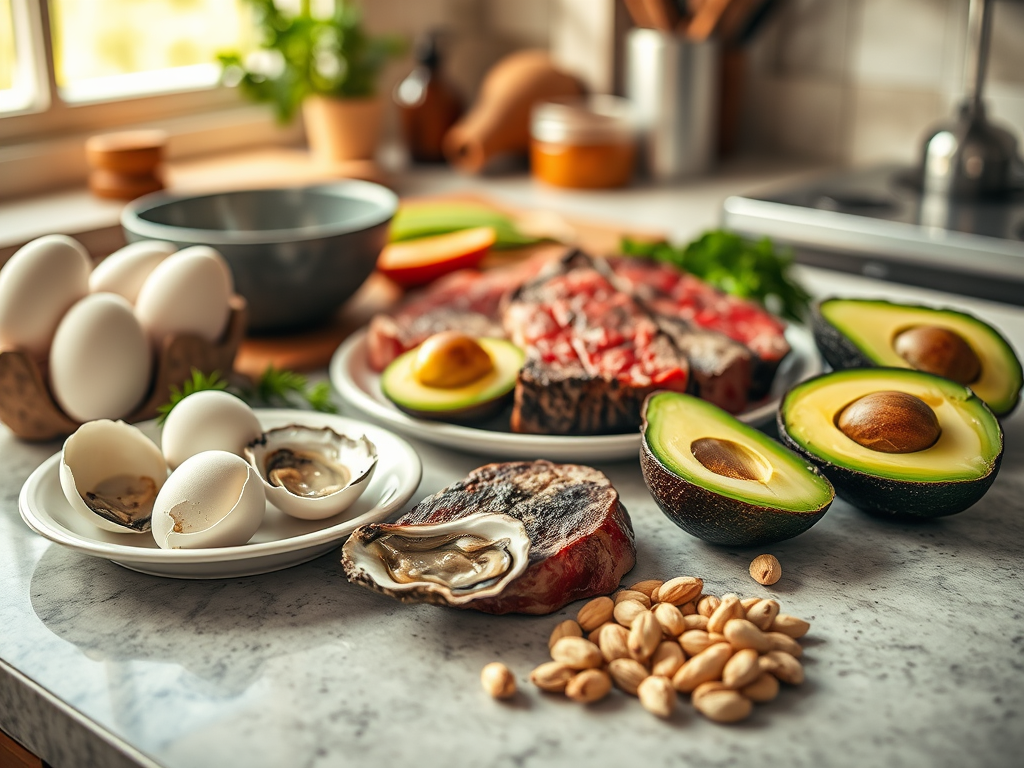
Want to boost testosterone without injections, crash diets, or endless supplements?
Start in the kitchen.
Testosterone is built from raw materials: cholesterol, amino acids, vitamins, minerals, and healthy fats. And the foods you eat directly impact your hormone production, metabolism, energy, and mood.
In this post, we’ll break down the top testosterone-boosting foods, why they work, and how to build them into a high-performance diet to support your strength, drive, and vitality.
🥚 Eggs – Cholesterol = Hormone Fuel
Whole eggs are one of the most complete hormone-supporting foods available.
Why it works:
- Packed with cholesterol, the building block for testosterone and DHEA
- Contains choline, which supports brain and liver health
- Rich in fat-soluble vitamins (A, D, E, K2) for hormone balance
🔑 Whole eggs > egg whites
Egg yolks contain almost all the nutrients. Don’t skip them — they’re where the hormone fuel lives.
✅ Tip: Eat 2–4 pasture-raised eggs daily, cooked in grass-fed butter or ghee.
🥩 Beef – Protein, Zinc, and B-Vitamins
Beef is a testosterone staple — especially grass-fed cuts, which contain more micronutrients and omega-3s.
Why it works:
- High in zinc, essential for Leydig cell function (testosterone production centers)
- Loaded with B12, B6, and niacin — crucial for androgen metabolism
- Provides complete protein to support lean muscle and hormone synthesis
✅ Tip: Include 4–6 oz of grass-fed ground beef, steak, or liver 3–5x/week.
🦪 Oysters – The King of Zinc
Oysters are the highest natural source of zinc — a mineral required for testosterone production, sperm quality, and immune health.
Why it works:
- Zinc increases LH (luteinizing hormone), which tells the testes to make testosterone
- Helps reduce estrogen conversion and supports sperm count
- Also provides selenium, copper, and vitamin B12
✅ Tip: Eat raw or steamed oysters 1–2x/week, or supplement if access is limited.
🥑 Avocados – Healthy Fats for T Production
Avocados are loaded with monounsaturated fats, which have been directly linked to higher testosterone levels in clinical studies.
Why it works:
- Supplies cholesterol and fat for hormone synthesis
- Rich in magnesium and boron, minerals tied to free testosterone
- Contains glutathione and antioxidants to protect hormone-producing tissues
✅ Tip: Add ½ to 1 whole avocado to meals with eggs, steak, or salmon.
🌰 Brazil Nuts – Selenium for Thyroid + T
Brazil nuts are the best food source of selenium, a trace mineral crucial for thyroid function and testosterone production.
Why it works:
- Selenium supports thyroid hormone conversion, which regulates metabolism and T output
- Acts as an antioxidant, protecting Leydig cells from oxidative damage
- Supports sperm motility and fertility
⚠️ Just 1–2 nuts per day delivers your full selenium needs — don’t overdo it.
🐟 Salmon – Omega-3s for Inflammation Control
Salmon provides omega-3 fatty acids (EPA and DHA), which reduce inflammation and support a healthy hormonal environment.
Why it works:
- Omega-3s improve testicular blood flow and nutrient delivery
- Supports brain health and mood, key for libido and drive
- Reduces inflammation that can suppress testosterone and increase estrogen
✅ Tip: Eat wild-caught salmon 2–3x/week, or supplement with a high-quality fish oil.
🧈 Grass-Fed Butter – Fat-Soluble Hormone Support
Don’t fear butter — especially from grass-fed cows. It’s a rich source of cholesterol, saturated fat, and fat-soluble vitamins.
Why it works:
- Provides vitamin K2, which helps regulate testosterone synthesis and bone health
- Contains CLA (conjugated linoleic acid) — linked to improved body composition
- Supports testosterone through saturated fat intake (critical for men)
✅ Tip: Use grass-fed butter to cook eggs, beef, and vegetables for a hormone-friendly meal.
🍓 Berries – Antioxidants for Leydig Cell Protection
Berries like blueberries, blackberries, and raspberries are loaded with polyphenols and antioxidants that protect testosterone-producing tissues.
Why it works:
- Reduce oxidative stress in Leydig cells (where testosterone is made)
- Inhibit aromatase — the enzyme that converts testosterone to estrogen
- Help regulate blood sugar, keeping insulin and cortisol in check
✅ Tip: Add ½ cup of berries to protein shakes, breakfast, or post-workout meals.
✅ Bonus: Eat 3–4 Balanced Meals per Day
Timing and structure matter just as much as food choices.
To keep testosterone steady:
- Eat every 4–6 hours
- Prioritize protein + healthy fat + antioxidant-rich carbs in each meal
- Don’t under-eat — chronic caloric restriction lowers testosterone over time
Sample Testosterone-Friendly Meal Plan:
| Meal | Example |
|---|---|
| Breakfast | Eggs + avocado + berries |
| Lunch | Grass-fed beef + sweet potato + greens |
| Dinner | Salmon + rice + sautéed veggies in butter |
| Snack | Greek yogurt + brazil nuts + blueberries |
🧠 Recap: Best Testosterone-Boosting Foods
| Food | Why It Works |
|---|---|
| 🥚 Eggs | Cholesterol, choline, fat-soluble vitamins |
| 🥩 Beef | Zinc, B-vitamins, protein for muscle & hormones |
| 🦪 Oysters | Top zinc source, libido, and sperm health |
| 🥑 Avocados | Healthy fats, magnesium, boron |
| 🌰 Brazil Nuts | Selenium for thyroid and testosterone |
| 🐟 Salmon | Omega-3s for inflammation and hormone support |
| 🧈 Butter | Saturated fat, K2, cholesterol |
| 🍓 Berries | Antioxidants protect testosterone-producing cells |
🌟 Final Thoughts: Fuel Your Hormones Like a High Performer
No supplement will outwork a broken diet.
Start with real, whole foods that deliver the raw materials your body needs to build testosterone, improve recovery, and maintain lean mass.
Consistency > Complexity
Eat 3–4 nutrient-dense meals per day, focus on quality animal-based proteins and fats, and stay on top of sleep, training, and stress.


Leave a Reply