
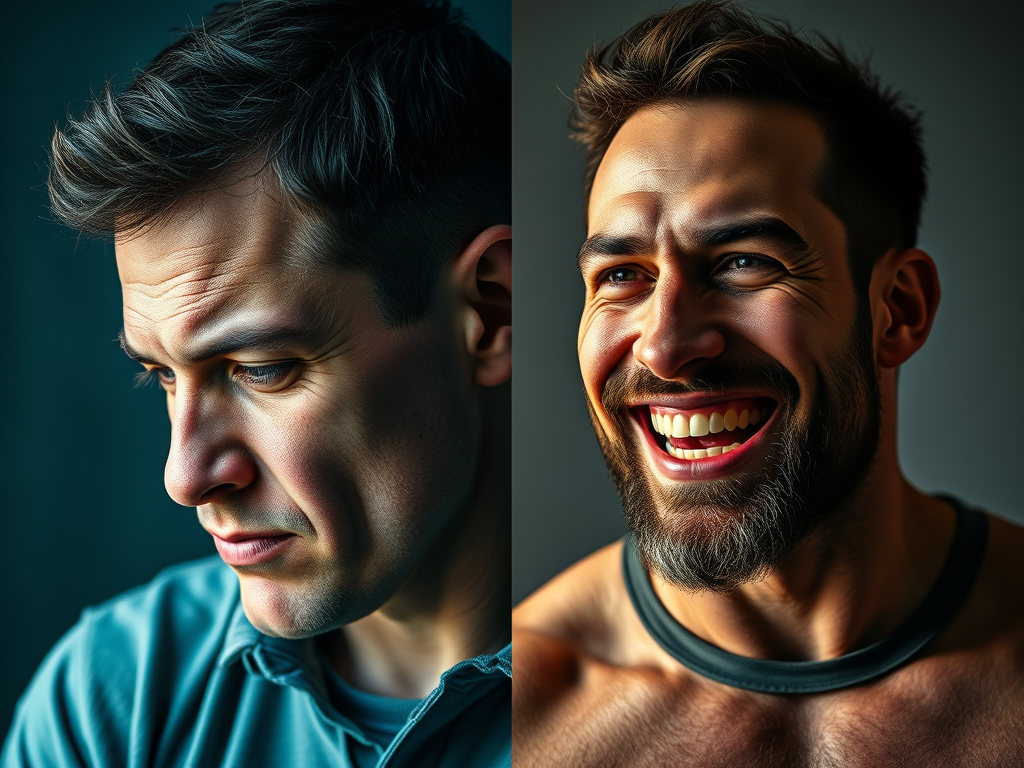
The Hidden Epidemic: Low Testosterone in Men
Here’s the truth that most guys don’t want to hear: low testosterone isn’t just a “dad bod” problem, and it’s not limited to men in their 50s or 60s. More and more men in their 20s, 30s, and 40s are struggling with low T—and most of them don’t even know it.
That’s because the signs aren’t always obvious. You don’t wake up one day and say, “Oh, my testosterone dropped overnight.” Instead, it’s a slow leak. Less energy here. A little more belly fat there. Workouts feel harder. Stress feels heavier.
And since testosterone is the foundation of male vitality, even a small decline can ripple into your energy, mood, focus, muscle mass, libido, and long-term health.
Why Testosterone Matters More Than You Think
Testosterone isn’t just about building muscle or boosting sex drive (though it helps with both). It’s the master hormone that drives:
- Muscle growth & strength – supports lean mass and performance.
- Energy production – fuels mitochondrial function.
- Mental focus & motivation – keeps your drive sharp.
- Libido & fertility – essential for healthy sexual function.
- Bone density & longevity – protects against frailty as you age.
When testosterone is optimal, you feel it. When it’s low, life feels like it’s missing its “spark.”
🚩 Subtle Signs You Might Be Low in Testosterone
Most men shrug these off as “normal aging” or stress. But they’re often red flags that your T is sinking:
- Constant fatigue (even after a full night’s sleep).
- Brain fog or lack of focus at work.
- Mood swings, irritability, or low motivation.
- Losing muscle or gaining fat—especially belly fat.
- Lower sex drive or weaker morning erections.
- Struggling to recover after workouts.
- Poor sleep quality or waking up unrefreshed.
If you recognize 2–3 of these, it’s worth digging deeper.
🥴 Everyday Habits That Crush Testosterone
Here’s where it gets sneaky: it’s not just aging that lowers testosterone. A lot of it comes down to lifestyle choices most men don’t even realize are sabotaging them.
- Poor Sleep → Testosterone is built at night. Less than 7 hours = lower T.
- Too Much Alcohol → Increases aromatase = more T gets converted to estrogen.
- High Stress & Cortisol → Chronic stress directly lowers testosterone.
- Processed Foods & Low Protein Diets → Starves your body of key building blocks.
- Sedentary Lifestyle → Less resistance training = lower testosterone.
- Excess Belly Fat → Fat tissue itself produces more estrogen.
The worst part? These are all fixable. Which means your testosterone is more in your control than you think.
🔎 How to Know for Sure: Testing Your T
Here’s the problem: most doctors only look at total testosterone. But the real game-changer is free testosterone—the portion that’s actually active in your body.
👉 Functional medicine (like WorldLink Medical guidelines) suggests looking at:
- Total Testosterone
- Free Testosterone
- SHBG (sex hormone binding globulin)
- Estradiol (E2)
- DHEA, cortisol, thyroid labs for context
If your total T looks “normal” but you still feel off, your free T might be low—and that’s the number that matters for how you feel.
🥩 Natural Ways to Boost Testosterone Back Up
The good news: you don’t have to jump straight to prescriptions. There are proven, natural strategies that can help restore testosterone:
- Sleep Like It’s Your Job → Aim for 7–9 hrs, dark room, no screens late.
- Lift Heavy, Sprint Occasionally → Resistance training + HIIT boosts T naturally.
- Eat Real Food → Steak, eggs, salmon, broccoli, olive oil, spinach = T-fuel.
- Manage Stress → Meditation, walks, or breathwork lower cortisol.
- Cut Back Alcohol & Processed Junk → Less aromatase activity, more free T.
- Supplement Smartly (science-backed options):
- Tongkat Ali → frees up bound testosterone.
- Zinc & Magnesium → essential cofactors for production.
- Vitamin D3 → hormone regulator.
- Ashwagandha → lowers cortisol, supports T.
- Creatine → boosts performance + DHT.
- Boron → lowers SHBG, increases free T.
🧑🔬 My Personal Takeaway
When I optimized my testosterone naturally, the difference was night and day:
- Energy: Steady and strong, no afternoon crash.
- Focus: Easier to get into deep work without distractions.
- Workouts: Strength gains came back, recovery felt faster.
- Mood & Drive: I felt more motivated to actually do things.
Low T doesn’t hit all at once—it sneaks up on you. But when you fix it, you realize how much of yourself you were missing.
🚀 The Bottom Line
Most men are running around with sub-optimal testosterone without even realizing it. The signs are subtle, the mistakes are common, and the solution is closer than you think.
If you’re feeling off—low energy, brain fog, stubborn fat, poor sleep—it’s worth checking your testosterone. Don’t just accept “getting older” as the answer.
👉 Want a science-backed way to get started? Check out the Testosterone Optimization Protocol we are putting together at COMPLETE PROTOCOL, subscribe to blog to hear about it and best part ALL FREE. It covers supplements, foods, workouts, and lifestyle hacks to naturally raise your T and DHT.
Leave a Reply